What is a Construction Waste Management Plan?
Construction projects are exciting because they bring new homes, buildings, and industries to life. But behind the progress, there is often a big challenge—waste. From leftover concrete and wood to packaging materials and metals, construction sites produce a lot of debris. This is where a construction waste management plan (CWMP) plays an important role.
A construction waste management plan is a documented strategy that outlines how waste will be reduced, reused, recycled, and disposed of during a project. It ensures that resources are used wisely, the environment is protected, and costs are kept under control. For contractors, project managers, and even clients, having a solid CWMP shows commitment to sustainable and cost-efficient construction.
Why is a Construction Waste Management Plan Important?
Waste is not just trash—it’s money, materials, and time. Without a plan, waste piles up, disposal costs increase, and projects may even face delays. Let’s look at why CWMPs are so important:
- Cost Savings
- Managing waste reduces unnecessary expenses. By recycling or reusing materials, contractors can cut down on buying new resources.
- Environmental Protection
- Construction waste can harm soil, water, and air if not handled properly. A waste plan ensures safe disposal and recycling, reducing pollution.
- Legal Compliance
- Many regions require construction companies to follow strict waste disposal regulations. A CWMP helps stay compliant and avoid fines.
- Improved Reputation
- Clients are more likely to trust contractors who show responsibility toward sustainability. A waste management plan highlights professionalism.
- Efficient Project Management
- Clear waste handling processes keep job sites cleaner, safer, and more productive.
Key Components of a Construction Waste Management Plan
A strong CWMP covers every stage of waste handling. Here are the main elements:
1. Assessment of Waste Types
Before starting a project, identify the materials that will likely turn into waste. Common examples include concrete, bricks, wood, drywall, metals, plastics, and packaging.
2. Waste Reduction Strategies
Plan ways to reduce waste before it even starts. For instance:
- Ordering accurate quantities of materials
- Using prefabricated components
- Training workers to minimize errors
3. Reuse and Recycling Methods
Not all waste is useless. Wood scraps, metal pieces, and even concrete can be reused or recycled. Many recycling facilities turn old concrete into aggregates for new projects.
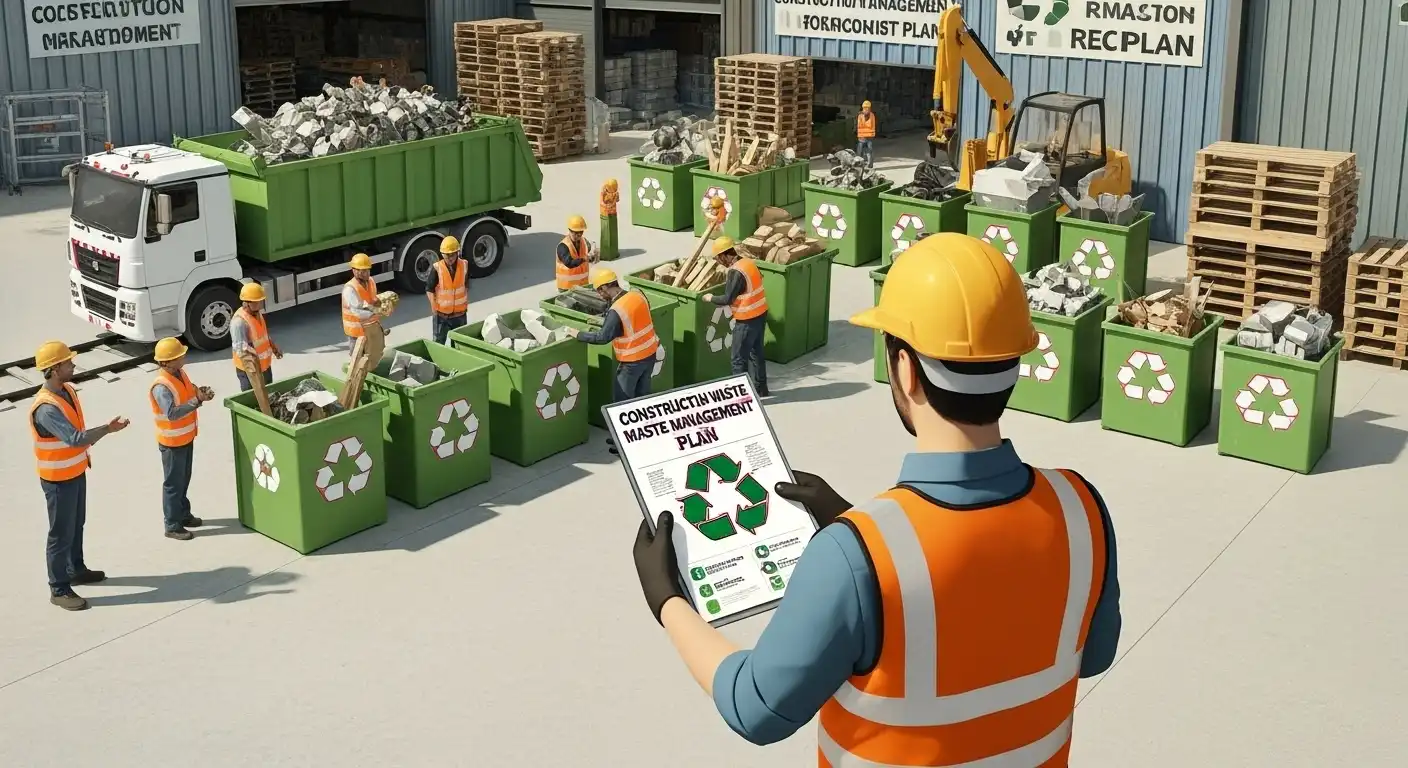
4. Collection and Storage Procedures
Set up labeled bins or storage areas on-site. This keeps recyclable, reusable, and disposable materials separate and organized.
5. Transportation and Disposal
Decide how waste will be transported off-site. Partnering with licensed waste management companies ensures compliance and efficiency.
6. Tracking and Reporting
Keep a record of waste quantities, recycling rates, and disposal methods. This helps evaluate the plan’s success and improves future projects.
Benefits of a Construction Waste Management Plan
A CWMP is not just a document—it delivers real benefits for construction projects:
- Lower Project Costs: Saving money by reusing and recycling materials.
- Sustainability: Supporting green building practices and reducing environmental harm.
- Client Satisfaction: Clients value eco-friendly approaches and professional management.
- Safer Job Sites: Organized waste handling reduces accidents and hazards.
Competitive Edge: Companies with CWMPs stand out in the construction industry.
How a Construction Waste Management Plan Works in Different Projects
Each type of construction project deals with waste differently. Here’s how CWMPs play a role in various sectors:
Residential Projects
Home construction or renovation produces waste like wood, drywall, and packaging. A CWMP in residential construction estimating ensures that homeowners save costs while reducing environmental impact.
Commercial Projects
Offices, retail buildings, and complexes generate large amounts of mixed waste. A well-planned CWMP paired with commercial construction estimating keeps projects compliant with regulations while lowering disposal costs.
Industrial Projects
Factories and warehouses may involve metals, concrete, and industrial packaging waste. Here, industrial construction estimating works alongside CWMPs to ensure safety, efficiency, and sustainability.
Steps to Create an Effective Waste Management Plan
If you’re planning a project, here’s a simple guide to creating your CWMP:
- Identify Waste Materials – List all possible waste items before construction starts.
- Set Waste Goals – Decide recycling and reuse targets (for example, recycle 70% of concrete).
- Assign Responsibilities – Make sure workers know who is responsible for waste handling.
- Organize Waste Areas – Provide bins, containers, and clear labels for waste separation.
- Partner with Professionals – Work with recycling centers and waste management companies.
- Monitor Progress – Track waste levels and adjust strategies if needed.
Review and Improve – After the project, review the outcomes and improve for plans.
Future of Construction Waste Management
The construction industry is moving toward zero-waste goals. Many companies are adopting digital tracking systems, eco-friendly materials, and innovative recycling methods. Governments also provide incentives for green practices. In the future, CWMPs will become a standard part of every project, ensuring a balance between progress and sustainability.
Conclusion
A construction waste management plan is more than a requirement—it’s a tool for saving money, protecting the environment, and improving project efficiency. Whether it’s a small home, a large commercial building, or an industrial complex, a CWMP ensures that waste is managed responsibly and cost-effectively.
By combining strong waste strategies with accurate residential, commercial, and industrial construction estimating, Vertex Estimation can deliver successful projects that benefit both clients and the environment.