Why Estimation Matters in Construction
Estimation is important in construction because it controls costs, sets realistic timelines, and reduces risks for smooth project success. Estimation is the map that guides every construction project. Without a clear estimate, teams waste time, money, and trust. Here, Vertex Estimation explains why good estimating matters and how it makes projects run smoother, safer, and more profitable.
What is construction estimation?
Construction estimation is a short process of predicting cost, time, and resources required to complete a project. Estimators sum up materials, labor, equipment, permits, and risk. A good estimate is truthful, momentous, and founded on data. Clearly, the ways of doing this in Estimation have strict approaches to help the owners and contractors make intelligent decisions.
Why is estimation important in construction? — quick overview
- Controls cost: prevents surprises and budget blowouts.
- Keeps schedule realistic: helps teams plan work and meet deadlines.
- Reduces risk: highlights unknowns so teams can reduce shocks.
- Improves decision-making: owners compare options with facts.
- Builds trust: clear estimates set expectations for everyone.
Cost control: stop small mistakes from becoming big bills
A precise estimate shows where money will go. It lists material quantities, labor hours, equipment rental, and overhead. When numbers are right, buyers and builders know if a change is affordable. Vertex Estimation focuses on breaking the job into small parts so errors stay small. This means fewer change orders and steadier cash flow.
Time and schedule: plan work that actually fits the calendar
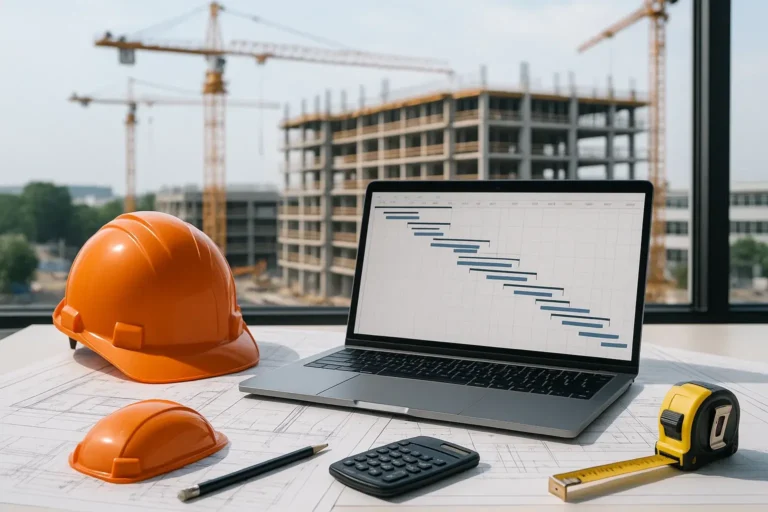
Time is money on a job site. Estimation sets realistic durations for each task — excavation, framing, wiring, and finishes. When durations stack up correctly, the project schedule becomes reliable. That helps subcontractors plan, suppliers deliver on time, and owners avoid costly delays.
Risk management: see trouble before it happens
Every project has risks: weather, site issues, permitting delays, and price swings. A good estimate lists these risks and adds allowances or contingency funds. Vertex Estimation uses risk checks so teams are ready. That lowers the chance of emergency spending and last-minute chaos.
Quality and scope: keep the project goal clear
Estimates tie price to scope. This prevents “scope creep” — when small changes grow and cost more. With a clear estimate, the owner knows what is included in the price and what counts as an extra. That keeps quality consistent and avoids arguments later.
Better bids and a competitive advantage for contractors
For contractors, estimating well wins work. An accurate bid shows confidence and competence. It avoids underbidding (losing money) and overbidding (losing jobs). Vertex Estimation helps contractors price work so they stay competitive and profitable.
Better bids and a competitive advantage for contractors
Banks and investors want to see reliable numbers. Accurate estimates show lenders that the money will be used wisely and the project can be finished. This improves chances of funding and can lower interest costs or improve loan terms.
Communication and teamwork: everyone stays on the same page
A detailed estimate becomes a shared plan. Project managers, architects, subcontractors, and owners use it as a reference. This reduces confusion and speeds approvals. When questions come up, teams refer to the estimate rather than guess.
Transparency and trust with clients
Owners appreciate clear estimates. They want to know where each rupee goes. Good estimating shows transparency and builds lasting relationships. Vertex Estimation puts clear line items in front of clients so they trust the process and the final result.
How estimating supports different types of projects
- Home projects: Budget predictability is crucial for families investing their savings. That’s where residential construction estimating helps homeowners avoid last-minute surprises like extra wiring or hidden structural fixes.
- Business builds: Office towers, malls, or retail fit-outs require strict timing to protect rental income and business openings. Through commercial construction estimating, project managers can stay on track with compliance, timelines, and financial planning.
- Large-scale industries: Factories and plants require precise planning for heavy machinery, utilities, and safety systems. Reliable industrial construction estimating helps ensure operations start on schedule and downtime is minimized.
Common estimating mistakes and how to avoid them
- Relying on rough guesses: use detailed takeoffs and current prices.
- Ignoring contingencies: always include a sensible buffer for unknowns.
- Skipping subcontractor quotes: get real bids for accuracy.
- Using outdated unit rates: update costs for local markets and current supply prices.
- Vertex Estimation follows disciplined steps — data collection, itemized takeoff, supplier quotes, and risk review — to avoid these pitfalls.
Tools and methods that improve estimates
Estimators use checklists, unit-rate libraries, historical project data, and estimating software. The best shops combine technology with experienced people. Vertex Estimation blends software tools and proven estimating methods to deliver fast, accurate results.
How to use estimates during the project lifecycle
- Pre-bid: shape the budget and choose the right scope.
- Design phase: test options and value-engineer without surprises.
- Procurement: secure suppliers with clear buy plans.
- Construction: track costs against the estimate and act on variances.
- Using estimates at each stage keeps teams proactive rather than reactive.
Simple steps to get a better estimate today
- Break the project into small, clear items.
- Get current local prices from suppliers and subs.
- Add contingency for risk — not too small, not too large.
- Review historical data from past similar projects.
- Update the estimate as designs or prices change.
- Vertex Estimation can guide you through these steps with templates and hands-on support.
Final thoughts — why Vertex Estimation
Estimation is more than math. It is the main structure of an effective construction project. With accurate estimating, projects are completed on schedule, under budget, and everyone is pleased. Estimation of Costs offers straightforward procedures, local market experience, and working tools in order to enable the owners and contractors to make better decisions. Proper estimating eliminates a lot of stress, waste of money, and loss of reputation.